Unlocking Lincoln in the Bardo: A Reader’s Guide
Master George Saunders' innovative debut novel with this comprehensive guide to its unique structure, ghostly voices, and profound themes of grief and history.
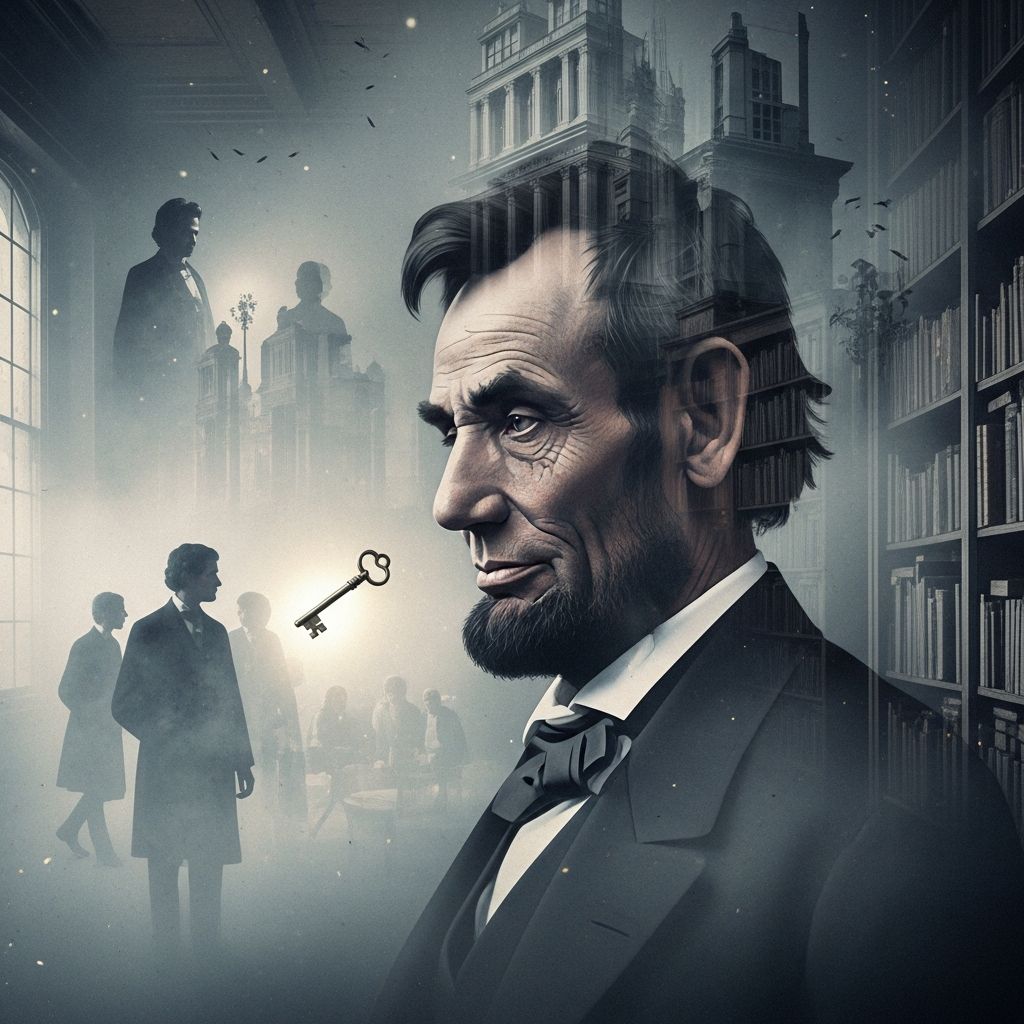
George Saunders’ debut novel, Lincoln in the Bardo, reimagines a poignant historical moment through an experimental lens, blending historical fact with supernatural invention. Centered on President Abraham Lincoln’s grief over his son Willie’s death in 1862, the book unfolds in a liminal afterlife space called the bardo, where ghosts cling to unresolved earthly desires. This guide offers fresh insights into its narrative innovations, thematic depths, and interpretive layers to enhance your reading experience.
The Historical Anchor: Willie Lincoln’s Tragic Death
In February 1862, during a brutal Washington winter, 11-year-old Willie Lincoln succumbed to typhoid fever amid the Civil War’s escalating horrors. Historical accounts confirm President Lincoln visited his son’s open coffin multiple times in Georgetown’s Oak Hill Cemetery, cradling the body in profound sorrow—a detail Saunders amplifies into the novel’s emotional core.
This real event grounds the fiction. Lincoln, burdened by national leadership and personal loss, embodies a man torn between duty and despair. Saunders uses this to probe how private grief intersects with public responsibility, transforming a cemetery visit into a metaphysical crossroads.
Navigating the Novel’s Unconventional Narrative Style
Unlike traditional novels, Lincoln in the Bardo eschews a single narrator for a chorus of voices: fragmented ghost monologues, historical excerpts, and Lincoln’s introspective fragments. Readers must piece together the story like a mosaic, attuning to each spirit’s repetitive obsessions that reveal their earthly failures.
- Polyphonic Ghost Voices: Spirits like Hans Vollman (a gentleman interrupted mid-life) and Roger Bevins III (a suicide with multiplied senses) dominate early chapters, their elongated forms and fixations signaling denial of death.
- Historical Interludes: Snippets from 19th-century texts on Lincoln and Willie provide factual scaffolding, contrasting the bardo’s chaos with documented reality.
- Lincoln’s Inner Dialogue: Rare third-person passages delve into the president’s bifurcated mind—rational duty versus overwhelming sorrow—offering narrative relief and agency.
This structure demands active engagement, mirroring the ghosts’ fragmented existences. As you read, note how voices overlap and interrupt, building empathy for even flawed souls.
Decoding the Bardo: A Realm of Stuck Souls
Drawn from Tibetan Buddhist cosmology, the bardo is an intermediate state between death and rebirth. In Saunders’ vision, it’s a graveyard limbo where souls manifest as distorted ‘sick-forms’—swollen, injured caricatures of their dying moments—trapped by attachments to ‘the previous place’ (life).
| Ghost | Earthly Demise | Bardo Manifestation | Unresolved Desire |
|---|---|---|---|
| Hans Vollman | Accidental death on wedding night | Gigantic, erect member | Marital bliss |
| Roger Bevins III | Self-inflicted throat wound | Multiple eyes, hands, noses | Experiential fullness |
| Elvee Kay (Traynor girl) | Train crash with pigs | Rage-fueled wreck loop | Escape from trauma |
These inhabitants form a spectral society, debating entry into the light (‘matterlightblooming phenomenon’) represented by familial ‘light-blobs.’ Refusal perpetuates torment, underscoring themes of denial and the peril of clinging.
Lincoln as Catalyst: Bridging Worlds
Lincoln’s physical presence disrupts the bardo. His tender act of lifting Willie’s corpse shocks the ghosts, fueling their intervention to free the boy, whose youth makes lingering untenable. This sparks communal action: ghosts enter Lincoln’s body en masse, experiencing expansive unity—’E Pluribus Unum’ literalized—fostering unprecedented empathy across divides of race, class, and history.
Through Lincoln, Saunders explores moral complexity. The president grapples with war’s necessities—ending suffering via bloodshed—echoing his era’s crises. This ‘Saundersian dilemma’ questions engagement’s costs: compassion demands compromise.
Core Themes: Grief, Empathy, and Human Compromise
Grief’s Paralyzing Grip
Willie’s arrival forces ghosts to confront collective loss, paralleling Lincoln’s stasis. The novel portrays grief as a bardo-like limbo, where forward movement requires painful release.
Empathy Across Divides
By inhabiting varied souls—from slaves to owners—readers and characters gain sympathy, challenging judgments. Saunders’ snapshots humanize the reprehensible, promoting understanding in a divided nation.
The Cost of Engagement
Lincoln’s arc resolves in recommitted leadership, accepting war’s horrors for preservation. This mirrors life’s trade-offs: meaningful action invites suffering.
Practical Reading Strategies for First-Timers
- Embrace the Fragmentation: Don’t seek linear plot; savor voice rhythms and repetitions as character portraits.
- Track Key Ghosts: Focus on Vollman, Bevins, and Rev. Everly Thomas for narrative anchors amid the chorus.
- Visualize the Bardo: Imagine a vivid, grotesque cemetery at night—corpses re-entered by day, spirits roaming freely.
- Contextualize History: Recall Civil War backdrop; Lincoln’s 1862 mindset amid mounting casualties.
- Audio Companion: Listen to the audiobook with celebrity narrators for voices’ full effect.
These tips transform potential confusion into immersion, revealing the novel’s brilliance.
Critical Acclaim and Cultural Impact
Published in 2017, Lincoln in the Bardo won the Man Booker Prize, praised for innovation and humanity. Critics hail its democratic polyphony, reflecting America’s fractures while affirming unity’s possibility. Saunders’ debut cements his shift from short stories to novelistic ambition.
Frequently Asked Questions (FAQs)
What is the bardo in Lincoln in the Bardo?
The bardo is a Tibetan-inspired afterlife limbo where souls linger due to attachments, manifesting distorted forms and repeating regrets until entering the light.
Is Lincoln in the Bardo based on true events?
Yes, Willie Lincoln’s death and his father’s cemetery visits are historical; Saunders fictionalizes the supernatural bardo around them.
Why is the novel so hard to read?
Its experimental form—ghost monologues without dialogue tags, historical snippets—forces active reconstruction, rewarding patient readers with profound insights.
What does the ghost pile into Lincoln symbolize?
It literalizes national unity (‘E Pluribus Unum’), letting diverse souls experience shared empathy through the president’s body.
Does the novel have a happy ending?
Bittersweet: Willie moves on, Lincoln recommits to duty amid grief, affirming life’s forward momentum despite loss.
References
- What Incarnation: A Review of Lincoln in the Bardo by George Saunders — Ex Puritan. 2017-03-15. https://ex-puritan.ca/what-incarnation-a-review-of-lincoln-in-the-bardo-by-george-saunders
- Lincoln in the Bardo by George Saunders Plot Summary — LitCharts. 2023-05-10. https://www.litcharts.com/lit/lincoln-in-the-bardo/summary
- A Triumph of Imagination – Lincoln in the Bardo, by George Saunders — Seven Circumstances. 2018-01-10. https://sevencircumstances.com/2018/01/10/a-triumph-of-imagination-lincoln-in-the-bardo-by-george-saunders/
- Good Grief: Lincoln in the Bardo by George Saunders — Sydney Review of Books. 2017-04-20. https://sydneyreviewofbooks.com/reviews/good-grief-lincoln-in-the-bardo-by-george-saunders
- Review: Lincoln in the Bardo by George Saunders — The Book Habit. 2018-11-09. https://thebookhabit.co.uk/2018/11/09/review-lincoln-in-the-bardo-by-george-saunders/
- Lincoln in the Bardo – review — Metaphors and Miscellanea. 2020-01-07. https://therealkspecks.wordpress.com/2020/01/07/lincoln-in-the-bardo-review/
- George Saunders Explains How To Read Lincoln In The Bardo — YouTube (Dua Lipa Book Club). 2023-10-01. https://www.youtube.com/watch?v=iKwYPzViqic
Similar Articles








Read full bio of medha deb