Variable Rate Student Loans: Risk vs Reward
Explore if variable interest rates on student loans offer savings or hidden dangers for your financial future.
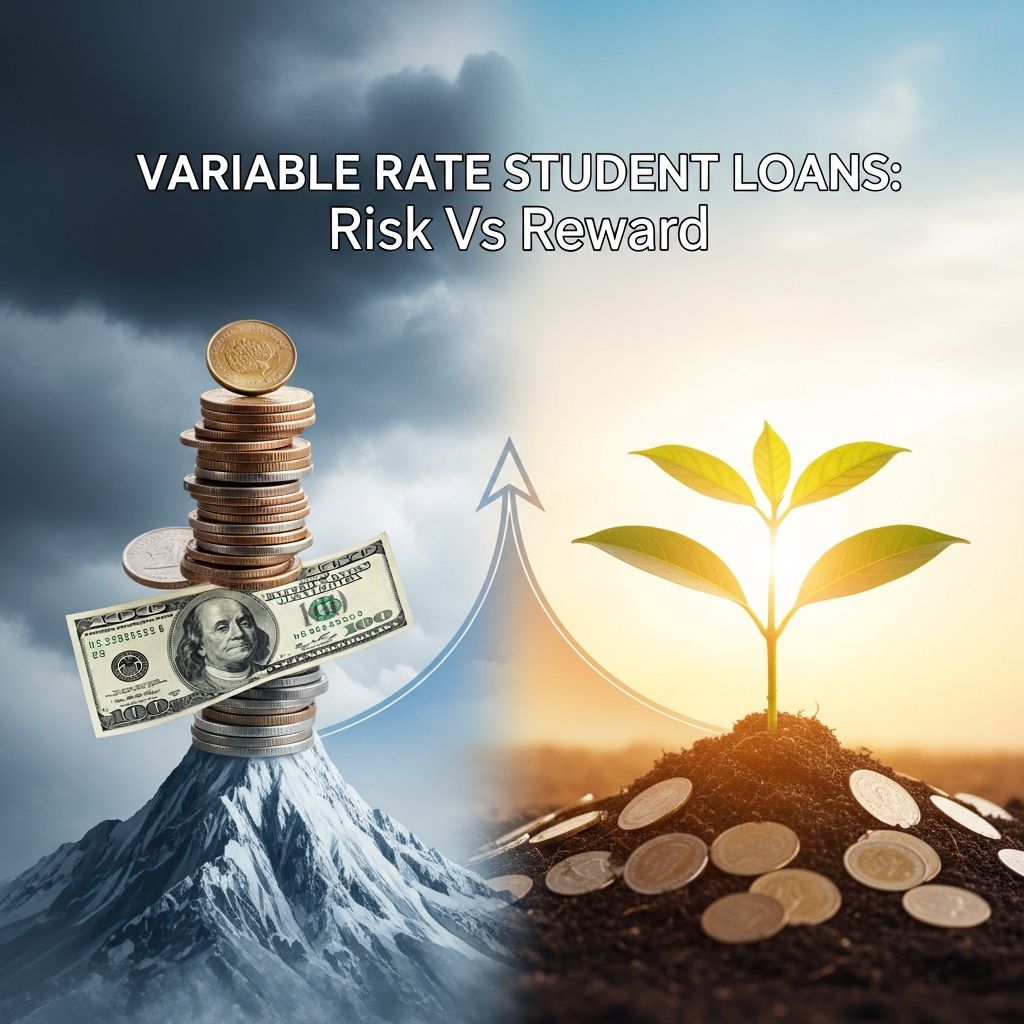
Student loans are a lifeline for many pursuing higher education, but selecting the right interest rate type can profoundly affect long-term finances. Variable rates often entice with lower initial costs, yet they introduce uncertainty that not all borrowers can handle. This guide breaks down the mechanics, advantages, pitfalls, and decision factors for variable versus fixed-rate options, empowering you to choose wisely.
Understanding Interest Rate Types in Student Financing
Interest rates on student loans fall into two primary categories: fixed and variable. A fixed rate remains constant throughout the loan term, offering stability regardless of broader economic shifts. Conversely, a variable rate adjusts periodically based on market benchmarks, potentially lowering or raising your payments over time.
Federal student loans exclusively feature fixed rates, providing uniformity. Private lenders, however, offer both, giving borrowers flexibility but also added responsibility in decision-making. Variable rates typically tie to indices like the prime rate or Secured Overnight Financing Rate (SOFR), plus a lender margin. Adjustments occur monthly or quarterly, with caps limiting extreme swings.
Key Differences Between Fixed and Variable Rates
| Aspect | Fixed Rate | Variable Rate |
|---|---|---|
| Payment Stability | Consistent monthly amount | Fluctuates with market indices |
| Starting Rate | Usually higher | Often lower initially |
| Risk Level | Low – no increases | Medium to high – potential rises |
| Best For | Long-term borrowers | Short-term payoff plans |
This table highlights core contrasts, drawn from lender comparisons. Fixed options shield against hikes, ideal when rates trend upward, while variables shine if markets decline.
Advantages of Fixed-Rate Student Loans
- Budget Predictability: Knowing your exact payment simplifies financial planning, crucial for recent graduates with variable incomes.
- Protection from Rate Hikes: In rising interest environments, your costs stay locked, avoiding surprises.
- Long-Term Peace of Mind: No need to monitor markets or refinance unless desired.
Fixed rates suit most students, especially those on extended repayment plans spanning a decade or more. When locking in during low-rate periods, savings compound over time.
Drawbacks of Fixed-Rate Options
- Higher upfront rates mean larger initial payments compared to variables.
- Missed opportunities if rates drop; refinancing requires qualification and fees.
Despite these, the security often outweighs potential savings for risk-averse individuals.
Benefits That Make Variable Rates Appealing
- Lower Introductory Rates: Start with reduced costs, easing early repayment.
- Potential for Decreases: Falling indices lower your rate automatically, without refinancing hassles.
- Higher Savings Potential: Quick payoff strategies amplify benefits before adjustments.
Variables appeal to confident borrowers anticipating stable or declining markets, particularly with short-term horizons.
Risks and Downsides of Variable Rates
- Unpredictable Payments: Budgeting becomes challenging as amounts shift.
- Possible Increases: Sharp rises could strain finances, even with caps.
- Total Cost Uncertainty: Hard to forecast lifetime interest.
Historical trends show variables outperforming in low-rate eras but faltering during inflation spikes. Lenders impose lifetime and periodic caps—often 8-18% lifetime—to mitigate extremes.
Who Benefits Most from Each Rate Type?
Choose Fixed If:
- You prioritize stability over savings.
- Repayment extends 10+ years.
- Your income is inconsistent or entry-level.
Opt for Variable If:
- Planning aggressive payoff within 5 years.
- High income buffers rate hikes.
- Expect market declines based on economic outlook.
Risk tolerance is pivotal. Conservative profiles favor fixed; aggressive ones, variable. Parents cosigning for children might lean fixed for reliability.
Real-World Rate Fluctuation Examples
Consider a $30,000 loan at 5% initial variable rate (SOFR + 2.5% margin), 10-year term. If SOFR rises 2%, payments jump ~$25 monthly. Dropping 1% saves similarly. Fixed at 6% starts higher but evens out if variables climb. Use online calculators to model scenarios based on current indices.
Strategies to Manage Variable Rate Risks
- Pay Extra Early: Front-load principal to shorten exposure.
- Monitor Indices: Track SOFR or prime via Federal Reserve sites.
- Refinance Opportunistically: Switch to fixed if rates spike and credit improves.
- Build Emergency Funds: Cover 3-6 months of potential higher payments.
Combining variables with autopay discounts enhances appeal, as many lenders offer 0.25% reductions.
Federal vs Private Loan Considerations
Federal loans’ fixed rates include income-driven plans with forgiveness, minimizing variable needs. Private loans demand careful rate selection, especially for refinancing federal debt—losing federal protections. Compare offers from multiple lenders for best terms.
Current Market Insights for Borrowers
As of recent data, variable rates hover 0.5-1% below fixed equivalents amid steady SOFR. Yet, with potential Fed adjustments, variables carry heightened risk. Shop rates via platforms aggregating lender offers.
Frequently Asked Questions
What Causes Variable Rates to Change?
Rates adjust based on benchmark indices like SOFR or prime rate, reflecting broader economic conditions.
Are There Caps on Variable Rate Increases?
Yes, most include periodic (e.g., 2% per year) and lifetime caps (e.g., 10-15%).
Can I Switch from Variable to Fixed?
Refinancing allows this, but requires good credit and rates must improve.
Is Variable Better in a Low-Rate Environment?
Often yes, for short terms, but fixed protects against unforeseen rises.
How Do I Calculate Potential Costs?
Use lender tools or spreadsheets inputting index forecasts and your payoff plan.
Making Your Final Decision
Assess your repayment timeline, financial cushion, and market views. Most experts recommend fixed for its reliability, reserving variables for calculated risks. Consult advisors and compare personalized quotes before committing. Thoughtful selection minimizes debt burden, freeing resources for life goals post-graduation.
References
- Fixed vs. Variable Rate Student Loans — Duke Credit Union. 2023. https://dukefcu.studentchoice.org/resources/guides/fixed-vs-variable-rate-student-loans/
- Fixed or Variable Student Loan Rate: Which Is Better? — Experian. 2024-01-15. https://www.experian.com/blogs/ask-experian/variable-vs-fixed-rate-student-loans/
- Variable vs. Fixed Student Loan Interest Rates — ELFI. 2024. https://www.elfi.com/fixed-variable-student-loan-rates-comparison/
- Fixed- or Variable-Rate Student Loan: Which Is Better? — NerdWallet. 2024-02-01. https://www.nerdwallet.com/student-loans/learn/fixed-variable-student-loan
- Fixed vs Variable Interest Rates — Sallie Mae. 2023-11-20. https://www.salliemae.com/blog/fixed-vs-variable-interest-rates/
- Fixed vs. variable student loan rates: Which is best? — Bankrate. 2024. https://www.bankrate.com/loans/student-loans/fixed-variable-student-loan/
- Fixed vs. Variable Interest Rates — South Carolina Student Loan. 2023. https://www.scstudentloan.org/college-planning-center/resources/fixed-vs-variable-interest-rates
Similar Articles






Read full bio of medha deb