Unveiling the Blue Sky: Science and Simple Experiments
Discover the fascinating physics behind our blue sky through hands-on experiments using everyday items like water and milk.
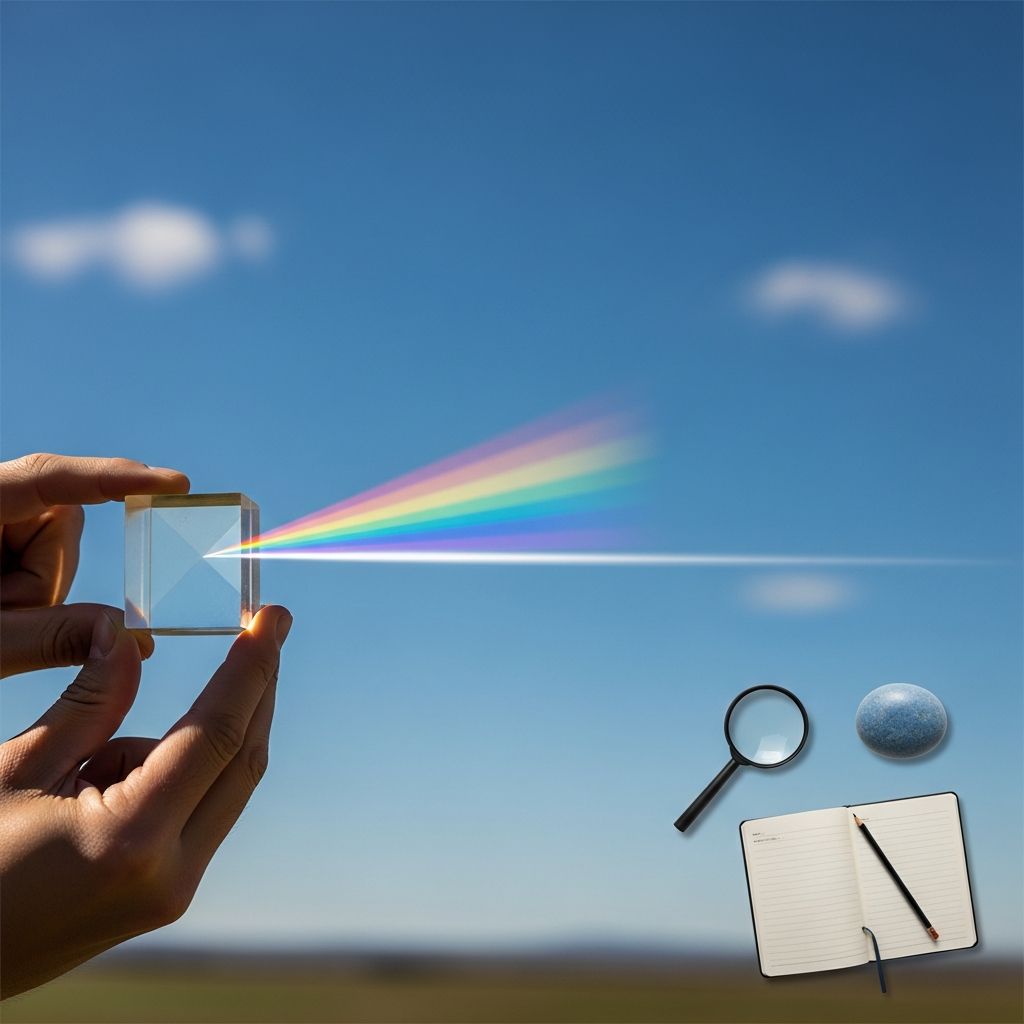
Have you ever looked up on a clear day and wondered why the sky stretches endlessly in shades of blue? This captivating color isn’t random—it’s the result of sunlight interacting with Earth’s atmosphere in a process called Rayleigh scattering. This article dives deep into the physics behind the blue sky, explores why sunsets glow red and orange, and guides you through easy, at-home experiments to witness these effects firsthand. Using common household items, you’ll replicate atmospheric conditions and see light behave just like it does high above us.
The Physics of Sunlight and Atmospheric Scattering
Sunlight appears white to our eyes, but it’s actually a blend of all visible colors, each with different wavelengths. Red light has the longest waves, around 700 nanometers, while blue and violet have the shortest, near 400 nanometers. When this light enters Earth’s atmosphere, it collides with nitrogen, oxygen, and tiny particles.
These molecules scatter the light in all directions, but not equally. Shorter blue wavelengths scatter up to 10 times more than longer red ones—a key principle of Rayleigh scattering, named after physicist Lord Rayleigh. Scattered blue light reaches our eyes from every direction, painting the sky blue during midday.
Near the horizon, light travels through thicker air layers, scattering even more blue away, leaving reds and oranges dominant. This explains vibrant sunsets. Dust, pollution, or smoke can enhance these colors by adding larger particles that scatter differently.
Key Principles: Wavelengths, Scattering, and Color Perception
- White Light Composition: Sunlight splits into a spectrum via prisms, revealing red (longest wavelength) to violet (shortest).
- Rayleigh Scattering: Applies to particles much smaller than light’s wavelength, like air molecules, favoring blue scatter.
- Tyndall Effect: Similar visible scattering in colloids, like milk in water, mimicking atmosphere.
- Path Length Impact: Longer atmospheric paths deplete blue light, yielding sunset hues.
Human eyes perceive this scattered blue most vividly because our retinas are sensitive to it, and the sky’s overhead view scatters it optimally.
Hands-On Experiment: Simulating the Blue Sky
Replicate the atmosphere with a jar of water and a splash of milk. Milk’s fat and protein particles act like air molecules, scattering light realistically.
Gather These Materials
- Clear glass jar or tall glass (about 16 oz)
- Water (room temperature)
- Whole milk (1-2 teaspoons)
- Flashlight or strong LED light
- Dark room for best contrast
Step-by-Step Instructions
- Prepare the Base: Fill the jar 3/4 full with clean water. Turn off room lights to darken the space.
- Observe Pure Water: Shine the flashlight straight down from the top. The beam looks white—no scattering occurs without particles.
- Add Scatterers: Stir in 1 teaspoon of milk (adjust for jar size; too much muddies results). The water turns pale blue-gray.
- View Sideways for Blue Sky: Shine light from above; peer through the side. You’ll see a blue glow—the scattered shorter wavelengths.
- Simulate Sunset: Shine light from below, viewing from top. Yellow-orange emerges as blue scatters out over the longer path.
This setup demonstrates how milk particles scatter blue light sideways (like daytime sky) and allow red through direct paths (like sunsets). Experiment with milk amounts: less for clearer blue, more for hazy conditions.
Advanced Variations and Observations
Enhance your setup for deeper insights:
| Variation | Setup Change | Expected Observation | Real-World Link |
|---|---|---|---|
| Low Milk Concentration | ½ tsp milk | Intense side blue, faint beam | Clean mountain air sky |
| High Milk Concentration | 2 tsp milk | Whiter overall, dimmer blue | Urban haze or polluted sky |
| Angled Light | Tilt flashlight 45° | Gradient colors from blue to yellow | Twilight transitions |
| Flashlight Color Filter | Red cellophane over light | Less scattering, reddish beam | Sunsets without blue input |
These tweaks reveal how particle size and density affect scattering, mirroring volcanic ash skies (more red) or pristine tropics (deeper blue).
Historical Discovery: From Curiosity to Rayleigh’s Law
Centuries ago, Leonardo da Vinci pondered sky color, suggesting ocean reflection. John Tyndall in 1869 demonstrated scattering with dusty air. Lord Rayleigh formalized the math in 1871: scattering intensity proportional to 1/wavelength⁴, explaining blue dominance. Modern satellites confirm this globally.
Everyday Phenomena Tied to Scattering
- Ocean Blue: Water molecules scatter blue similarly, deepened by depth absorption.
- Cloud White: Larger water droplets scatter all wavelengths equally.
- Black Sky in Space: No atmosphere means no scattering—stars visible daytime.
- Planetary Skies: Mars’ dust scatters red; Titan’s thick air mutes blue.
Frequently Asked Questions (FAQs)
What makes blue light scatter more than red?
Blue’s shorter wavelength (( lambda approx 450 ) nm) scatters ~9-10x more per Rayleigh’s law (( I propto 1/lambda^4 )).
Why are sunsets red?
Light passes through more atmosphere, scattering blue away, leaving longer red wavelengths.
Does pollution change sky color?
Yes, larger particles cause Mie scattering, whitening or reddening skies.
Can I do this experiment without milk?
Safe alternatives like dilute cornstarch work, but milk best mimics molecular size.
Why isn’t the sky violet if violet scatters most?
Sun emits less violet, and eyes are less sensitive to it than blue.
Extending the Learning: Classroom and Family Activities
Turn this into a full lesson: Measure scattering angles with protractors, graph milk concentration vs. color intensity using phone apps, or compare day/night photos. For kids, discuss rainbows (refraction + dispersion). Safety note: Supervise young children with flashlights; avoid ingestion.
This phenomenon bridges physics, chemistry, and earth science, fostering wonder about our world. Next clear day, glance up—now you know the invisible dance of light and air creating that blue canopy.
References
- Why Is the Sky Blue? — NESDIS, NOAA. 2023. https://www.nesdis.noaa.gov/about/k-12-education/atmosphere/why-the-sky-blue
- Why Is the Sky Blue? — NASA Space Place. 2024-01-15. https://spaceplace.nasa.gov/blue-sky/
- Tyndall Effect – Why the Sky is Blue — Royal Society of Chemistry Education. 2022-05-10. https://edu.rsc.org/resources/tyndall-effect-why-the-sky-is-blue/1877.article
- Why Is The Sky Blue? Easy At-Home Experiment — The Action Lab (YouTube). 2020-07-20. https://www.youtube.com/watch?v=-Xx7sPPTu3Y
- Why is the Sky Blue? {Science Experiment} — Frugal Fun for Boys. 2021-03-12. https://frugalfun4boys.com/why-is-the-sky-blue-science-experiment/
- Why is the Sky Blue? — Royal Meteorological Society MetLink. 2023. https://www.metlink.org/experiment/why-is-the-sky-blue/
Similar Articles







Read full bio of medha deb