Why Oceans Taste Salty: The Science Revealed
Unravel the geological and chemical processes that make Earth's oceans salty, from river runoff to deep-sea vents.
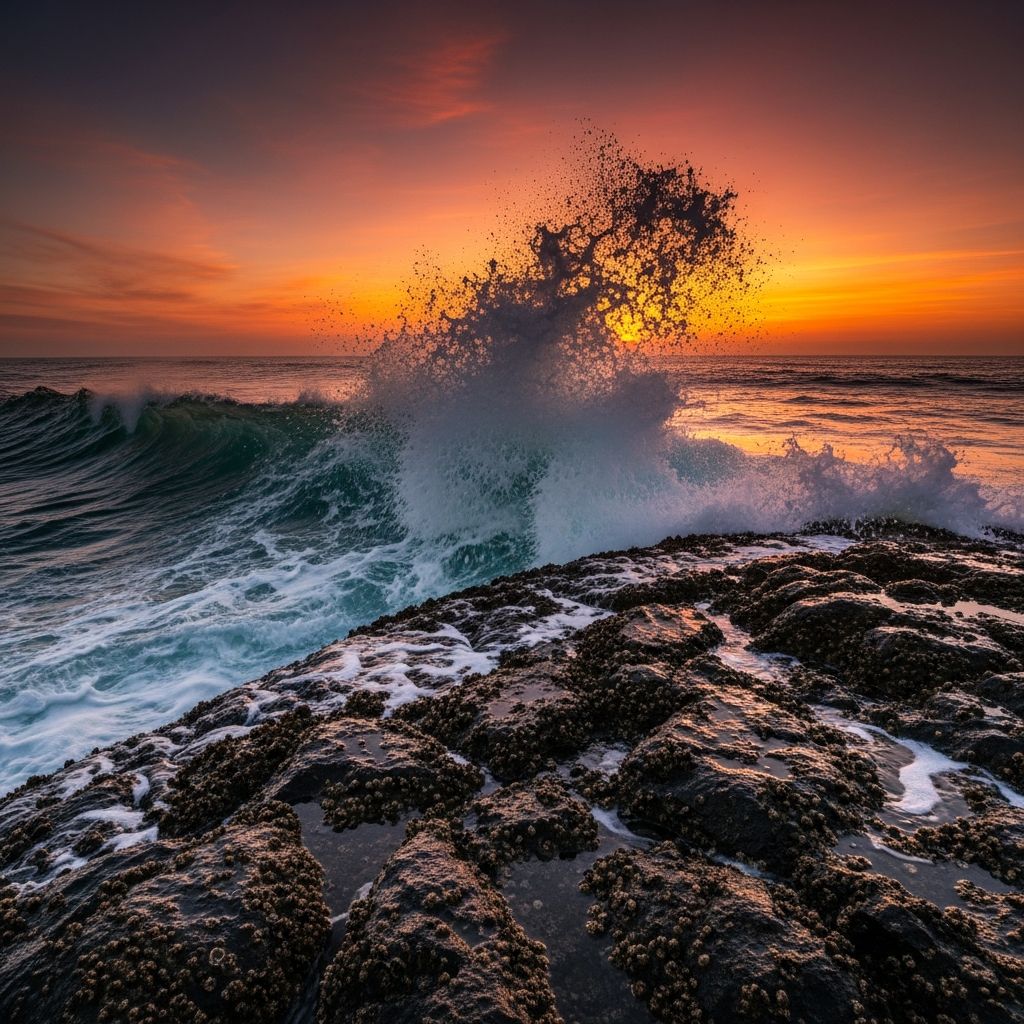
Ocean salinity arises primarily from the continuous delivery of dissolved minerals from continental rocks via rivers and from chemical exchanges at hydrothermal vents on the ocean floor.
The Journey of Salt from Land to Sea
Rainfall plays a pivotal role in transporting salts to the oceans. As rain falls, it absorbs carbon dioxide from the atmosphere, forming a weak carbonic acid that reacts with rocks on land, breaking down minerals into ions. These ions, including sodium, chloride, calcium, and magnesium, dissolve into the water and flow through rivers and streams into the sea. Experts estimate that rivers deliver approximately four billion tons of dissolved salts annually to the world’s oceans.
This process has been ongoing for billions of years, gradually increasing the salt content. Early Earth oceans were likely far less saline, but persistent erosion has accumulated vast quantities of salts. Unlike rivers, which are constantly refreshed by new precipitation, oceans act as enormous basins that retain these dissolved minerals.
Deep-Sea Contributions: Vents and Volcanoes
Beyond terrestrial sources, the seafloor hosts dynamic systems that enrich ocean water with salts. Hydrothermal vents occur where seawater seeps into cracks in the Earth’s crust, gets superheated by underlying magma, and undergoes chemical transformations. The hot fluid dissolves metals like iron, zinc, and copper from rocks, then erupts back into the ocean, adding to the mineral load.
Underwater volcanic activity further contributes by directly injecting minerals during eruptions. Salt domes—massive underground formations of evaporated ancient seas—also leach salts into surrounding waters, particularly in regions like the Gulf of Mexico.
Chemical Makeup of Seawater
Seawater’s salinity averages 35 parts per thousand, meaning 3.5% of its weight comes from dissolved salts. Sodium and chloride ions dominate, comprising about 85% of all dissolved ions, forming the familiar table salt (sodium chloride). Magnesium and sulfate account for another 10%, with trace amounts of others like potassium and bicarbonate.
| Ion | Percentage of Total Ions | Role in Ocean Chemistry |
|---|---|---|
| Sodium (Na+) | ~30.6% | Primary cation; stable in solution |
| Chloride (Cl-) | ~55% | Main anion; not readily removed |
| Magnesium (Mg2+) | ~3.7% | Used in biological processes |
| Sulfate (SO42-) | ~7.7% | Depleted by some reactions |
This table summarizes the dominant ions based on standard oceanographic data.
Why Doesn’t the Ocean Get Saltier?
Despite constant salt inputs, ocean salinity remains stable due to natural removal mechanisms. Marine organisms like plankton and shellfish extract ions such as calcium and magnesium to build shells and skeletons, sequestering them on the seafloor. Evaporation leaves salts behind in ocean surface waters, but precipitation and river inflows balance this. Over geological time, salts precipitate out in sediments or form evaporite deposits.
- Biological uptake: Phytoplankton and animals remove ions for growth.
- Seafloor sedimentation: Dead organisms sink, burying salts.
- Mineral formation: Salts crystallize in evaporative basins.
Variations in Salinity Around the Globe
Ocean salinity isn’t uniform; it fluctuates based on evaporation, precipitation, temperature, and ice melt. Mid-latitude regions, with high evaporation and low rainfall, exhibit higher salinity, while equatorial and polar areas are fresher due to heavy rains and ice melt.
- Equator: Diluted by intense rainfall.
- Poles: Freshened by melting ice.
- Subtropical gyres: Concentrated by evaporation.
Hypersaline environments like the Dead Sea result from extreme evaporation in landlocked basins, where water leaves but salts stay, increasing density and buoyancy.
Human and Climate Influences on Salinity
Climate change is altering salinity patterns. Accelerating polar ice melt injects freshwater, freshening high-latitude oceans, while warmer temperatures boost evaporation in subtropics. These shifts disrupt thermohaline circulation—the global conveyor belt of ocean currents driven by density differences from temperature and salinity.
Human activities, including river damming, reduce freshwater and sediment delivery, subtly impacting salt balances. Monitoring salinity helps scientists track climate effects, as changes influence nutrient distribution and marine ecosystems.
Historical Evolution of Ocean Salinity
Billions of years ago, as continents formed and volcanoes outgassed, primordial oceans began accumulating salts. Over eons, tectonic movements exposed rocks to erosion, amplifying inputs. Fossil records from ancient evaporites confirm salinity has hovered near modern levels for hundreds of millions of years, stabilized by removal processes.
During ice ages, lower sea levels concentrated salts in remaining waters; interglacials diluted them via meltwater. Today’s balance reflects this dynamic equilibrium.
Ecological Implications of Salty Seas
Salinity shapes marine life. Most species thrive at 30-40 ppt, but extremes host unique communities—halophiles in salt lakes or vent tubeworms near hydrothermal sites. Salt gradients drive osmotic regulation in fish and invertebrates, influencing distributions.
Changes threaten biodiversity; fresher Arctic waters stress Atlantic cod, while saltier Mediterranean impacts corals.
Frequently Asked Questions (FAQs)
Why are some seas saltier than others?
Areas with high evaporation and low inflow, like the Mediterranean or Red Sea, have elevated salinity, while river deltas are fresher.
Is ocean salinity increasing due to climate change?
No, it’s stable overall, but patterns are shifting: saltier subtropics, fresher poles from ice melt.
Can we desalinate oceans for drinking water?
Yes, reverse osmosis removes salts, but it’s energy-intensive and costly.
What happens if all salt was removed from the ocean?
Marine life would collapse; many species rely on specific ion concentrations for survival.
Are rivers becoming saltier?
Some are due to pollution and land use, but generally, they remain fresh compared to oceans.
Measuring and Studying Salinity
Oceanographers use conductivity-temperature-depth (CTD) sensors to measure salinity precisely. Satellite altimetry detects surface variations indirectly via density effects. Long-term data from ARGO floats track global changes.
Understanding salinity is crucial for climate modeling, as it influences heat transport and carbon cycling.
References
- Why is the ocean salty? — NOAA National Ocean Service. 2023-05-15. https://oceanservice.noaa.gov/facts/whysalty.html
- Why is the sea salty? — Natural History Museum. 2024-02-10. https://www.nhm.ac.uk/discover/quick-questions/why-is-the-sea-salty.html
- Why is the Ocean So Salty? — National Marine Sanctuary Foundation. 2023-08-22. https://marinesanctuary.org/blog/why-is-the-ocean-so-salty/
- What makes the ocean salty? — Woods Hole Oceanographic Institution. 2024-01-05. https://www.whoi.edu/ocean-learning-hub/ocean-facts/what-makes-the-ocean-salty/
- Why is the Ocean Salty? — U.S. Geological Survey. 2023-11-20. https://www.usgs.gov/water-science-school/science/why-ocean-salty
Similar Articles






Read full bio of medha deb